
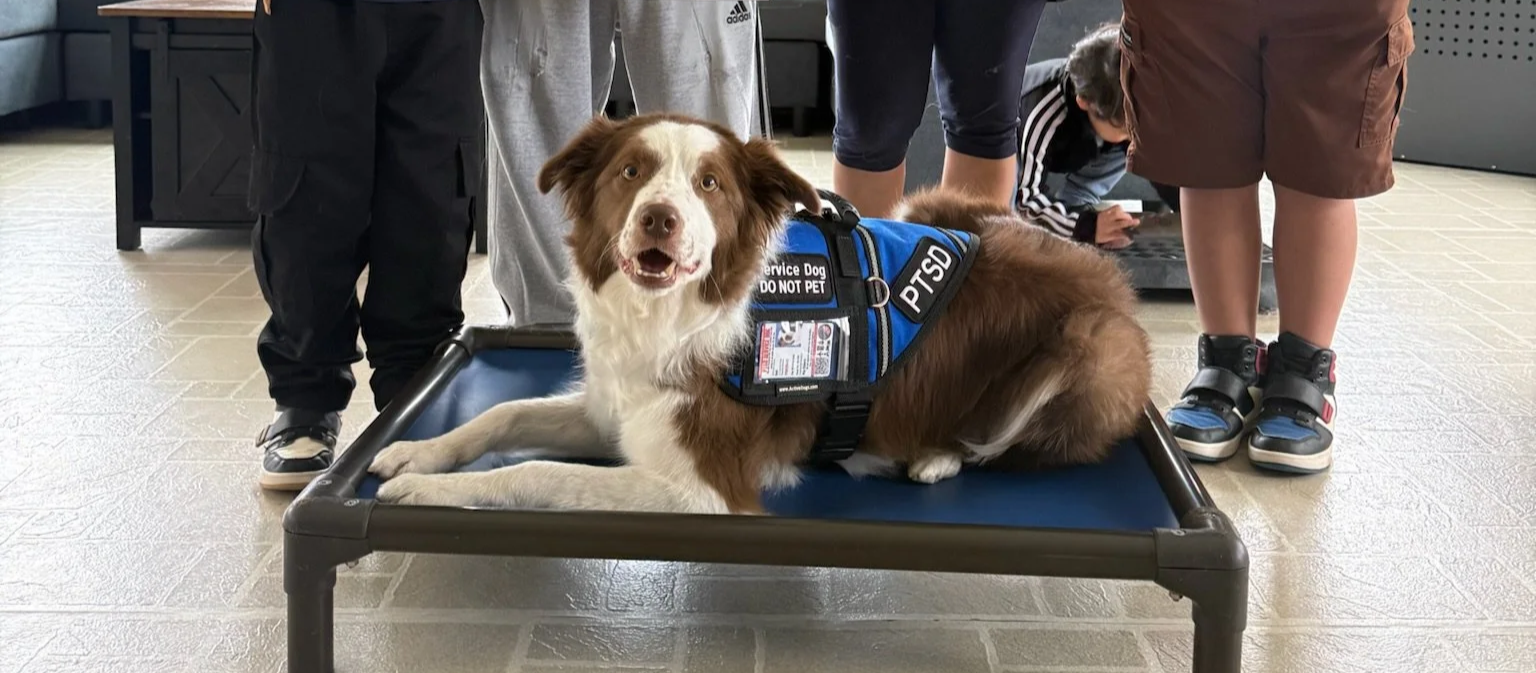
SERVICE DOG TRAINING IN POOLESVILLE, MD
The K9netic Assist Core program focuses on developing reliable Emotional Support Animals, Therapy Dogs, and Service Dogs. These programs build dogs that are calm, stable, and capable of supporting their handlers in real-world environments.
Each training path has different requirements and timelines depending on the dog’s temperament, maturity, and the role they are preparing for.
PROGRAM TRACKS
-
Minimum Program Length: 4 Week Board and Train
Emotional Support Animals provide comfort and emotional stability to their handler. These dogs do not have public access rights and are protected under the Fair Housing Act.Training focuses on building strong obedience, impulse control, and calm behavior in everyday environments.
Graduation standards include passing the AKC Canine Good Citizen (CGC) test.
-
Minimum Program Length: 4–6 Week Board and Train
Therapy dogs provide comfort and support to others in environments such as hospitals, schools, and nursing homes. These dogs must demonstrate a stable temperament and strong social skills.Training focuses on advanced obedience, impulse control, and exposure to public and community environments.
Graduation standards include:
• Passing AKC Canine Good Citizen Advanced (CGCA)
• Demonstrating stable social behavior around people
• Registration with a recognized therapy organization
• Completion of required therapy hours -
Minimum Program Length: 8–12 Week Board and Train
Service dogs are trained to perform tasks that mitigate their handler’s disability and must demonstrate reliable behavior in public environments.Training focuses on:
• Advanced obedience under distraction
• Public access behavior in stores, restaurants, and transportation
• Strong focus and impulse control
• Task training customized to the handlerGraduation standards include passing the Public Access Test (PAT) and AKC Canine Good Citizen Urban (CGCU) while demonstrating reliable task performance.
WHAT THIS PROGRAM IS BEST FOR
•
WHAT THIS PROGRAM IS BEST FOR •
Service Dog Programs are designed for dogs who:
• Have stable temperaments and strong work drive
• Show focus and resilience in new environments
• Are capable of advanced obedience and task work
• Are being developed for Emotional Support, Therapy, or Service roles
Dogs with aggression, reactivity, or severe anxiety are not eligible for these tracks but may qualify for other training programs.

HOW SERVICE DOG TRAINING WORKS
Service dog development begins with an evaluation to determine if your dog is a suitable candidate. Owners complete an intake form that screens for aggression, reactivity, anxiety, and basic obedience skills.
Trainers then evaluate the dog’s temperament, focus, drive, and reliability to determine whether they are a good fit for Emotional Support, Therapy, or Service work. Dogs with aggression, reactivity, or severe anxiety are not eligible for these tracks but may be redirected into obedience or behavioral training programs.
Accepted dogs enter a structured Board and Train program where they build obedience, stability, and task foundations. Handlers remain involved throughout the process and receive coaching to maintain the training at home.
Graduates receive a certificate of completion, a handler guide, and follow-up sessions depending on the program track.
• ESA – 1 follow-up session
• Therapy Dog – 2 follow-up sessions
• Service Dog – 3 follow-up sessions over 90 days
SERVICE DOG TRAINING FAQ
-
All dogs must pass an evaluation to determine temperament, stability, and work drive before entering a service dog track.
-
No. Service dogs must meet strict behavioral and temperament standards. Some dogs may be redirected into obedience or behavior training programs if they are not suitable candidates.
-
Training timelines vary depending on the dog and the tasks required. Most service dog development begins with an 8–12 week Board and Train program.
-
Emotional Support Animals provide support to their handler but do not have public access rights. Therapy dogs provide comfort to others in community settings. Service dogs perform trained tasks that mitigate their handler’s disability.
-
Service dogs must meet behavioral and task performance standards, including passing public access evaluations and task reliability requirements.
START WITH A CONSULTATION
Service dog development requires the right temperament, training, and partnership between dog and handler. The first step is an evaluation to determine if your dog is a suitable candidate.